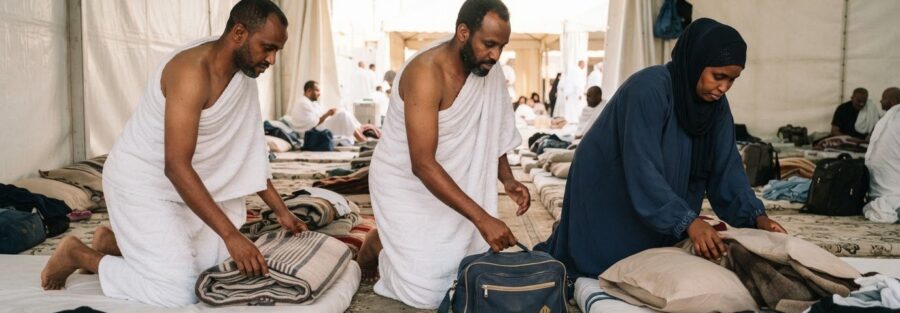
A Hajj package is not just a flight and a hotel room. Hajj packages from Kenya can be arranged for individual pilgrims or groups, while the package format shapes how travel is coordinated. Hotel standards also vary: Platinum includes 5-star hotels near the Haram, while Premium includes 4- or 5-star hotels.
It’s understandable to want a clear view of the costs before deciding, especially when the details affect comfort and the ease of the journey. Hajj package pricing depends on the arrangements and inclusions, so compare what each option covers, not just the headline price.
This guide explains the factors that shape Hajj package pricing and what to review in accommodation, visa consultancy, meals and guided Ziyarat tours. It also compares individual and group travel arrangements to help you identify what suits your needs.
Key Takeaways
- Learn which package details influence the quoted cost, so you can compare options by what they include.
- Understand how individual and group travel arrangements affect the way your journey is coordinated.
- See what to consider about flights, Saudi Arabia transportation and hotel accommodation.
- Find out how visa and travel document processing fits into Hajj planning.
- Explore the meal and guided Ziyarat arrangements that can shape your experience.
What is included in the hotel accommodation?
Hotel arrangements vary by package tier, location, and room allocation. The Platinum package includes 5-star hotels near the Haram. The Premium package includes 4- or 5-star hotels. These descriptions identify hotel standards, but pilgrims should also understand the room arrangement and the hotel’s location. A higher star rating does not, by itself, explain room occupancy, walking distance, or transport arrangements.
For each option, check that the accommodation details name the hotel in Makkah and any other destinations included. They should also explain whether rooms are shared and how assignments are made. When comparing two packages, consider the hotel category and room arrangement together. Clear details help you assess comfort and location rather than relying on a star rating alone.
Payment, cancellation and refund terms should be provided in writing before booking. Review payment due dates, cancellation charges and how refunds are handled, including what happens if you cancel after a deposit or later payment.
Kenyan pilgrims may plan flights from Nairobi or Mombasa, departing from Jomo Kenyatta International Airport or Moi International Airport. The itinerary should name the airlines and connecting airports. Baggage allowances and rules depend on the ticketed airline and fare.
For a Nairobi departure, check that the itinerary names the departure airport, connection points and arrival arrangements. The same details should be clear for travellers departing from Mombasa. If flights involve connections, the itinerary should list each flight and its operating airline, so you can understand how luggage is handled between segments. Confirm whether the package includes airport transfers in Saudi Arabia.
Review Saudi Arabia transport separately from the flights. Package details should state which transfers are included, where each journey begins and ends, and how pilgrims travel between the airport and accommodation. They should also describe transport between destinations. A written itinerary can clarify whether transfers are shared or arranged individually and when they are scheduled. These details help you understand what to expect after landing.
Compare hotel and transport details together. A hotel near the Haram may suit pilgrims who prioritise proximity, while a different location may require a different transfer plan. Ask for the hotel name, room arrangement and transfer schedule as one connected picture. A room category alone does not explain how you will travel from the airport or reach your accommodation. Package details should make these arrangements clear before payment.
Before choosing, review the written itinerary alongside the hotel details and ticket information. Check that the hotel category, room allocation, departure airport, flight itinerary, baggage allowance and Saudi Arabia transfers are explained. These practical details help Kenyan pilgrims assess what the accommodation and travel arrangements cover, rather than comparing package labels alone.
Visa and travel document processing
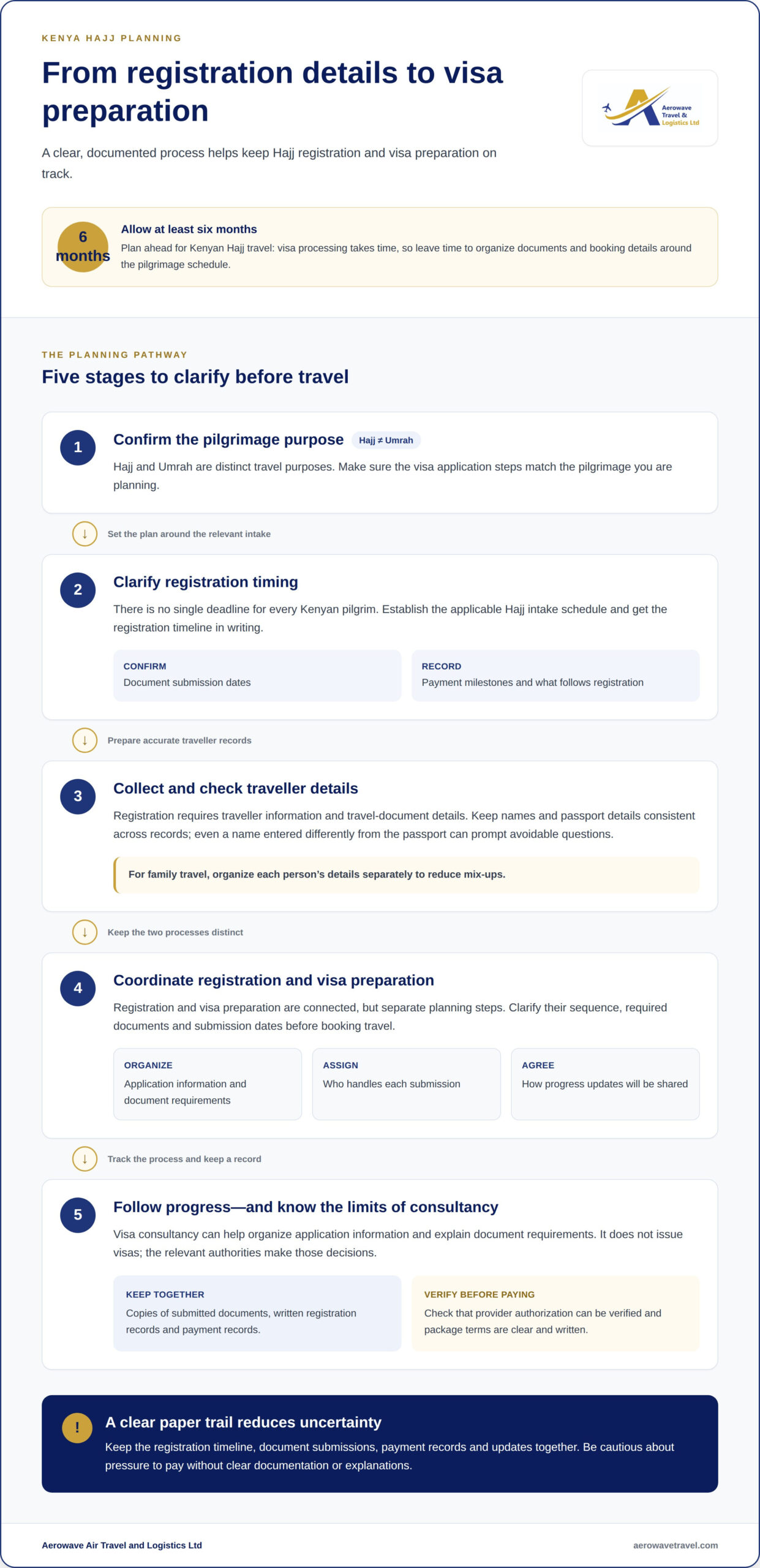
Visa preparation and Hajj registration are connected but separate planning steps. Clarify their sequence, required documents and submission dates before booking travel.
Hajj and Umrah Visa Processing
Hajj and Umrah are distinct travel purposes, so visa application steps must match the pilgrimage you are planning. Visa consultancy can help organize application information and explain document requirements, but it does not issue visas. Ask for a clear process that identifies the documents needed, who handles each submission and how you will receive updates. Keep names and passport details consistent across travel records.
For Hajj travel from Kenya, plan at least six months ahead because visa processing takes time. This allows time to organize documents and booking details around the pilgrimage schedule.
Registration Requirements and Deadlines
Kenyan Hajj registration requires traveller information and travel-document details. Deadlines follow the relevant intake schedule, so establish the submission timeline early. A clear process explains what information is needed, how it is submitted and what happens after registration. For example, a name entered differently from the passport can lead to avoidable questions during document preparation.
Ask for the registration timeline in writing, including document submission and payment milestones. Early planning is important because visa processing takes time. Allow at least six months to prepare.
There is no single registration deadline for every Kenyan pilgrim. The practical deadline depends on the relevant Hajj intake, with enough time allowed for travel-document and visa processing.
To reduce scam risk, choose a provider whose authorization can be verified and whose package terms are clear and written. Review the itinerary, payment records, cancellation terms and specific visa support provided. Be cautious about pressure to pay without clear documentation or explanations.
Visa and travel-document processing should have clear stages, such as collecting traveller details, organizing application information and communicating progress. The provider should explain which tasks it coordinates and which decisions rest with the relevant authorities. This distinction helps pilgrims understand visa consultancy without mistaking it for visa issuance.
Keep copies of submitted documents and written registration or payment records together. If family members are travelling with you, organize each person’s details separately to reduce mix-ups. A documented process also makes it easier to track outstanding steps against the itinerary.
For a coordinated approach to the travel arrangements, explore Hajj travel planning alongside document preparation.
Hajj package options and custom pricing
Package structure helps pilgrims compare what each arrangement covers beyond its headline price. For Hajj travel from Kenya, assess accommodation tier, room arrangements, flights, transfers, meals and planned services together.
Kenyan agencies authorized for Hajj are recognized through the official arrangements for the relevant season. Promotional material alone does not establish authorization, so look for documented participation in the official process.
Booking through Kenya’s official Hajj arrangements means coordinating registration and travel through a provider participating in the relevant official process. The provider should explain how the package aligns with that process and document services, payment stages and travel arrangements in writing.
Package tiers can differ in hotel category and proximity. For example, the Platinum option includes 5-star hotels near the Haram, while Premium includes 4- or 5-star hotels. A traveller comparing those options should also consider room occupancy and included transport, since hotel category alone doesn’t describe the full stay.
Custom pricing reflects the arrangements selected. The price depends on the individual case and is provided after a quote request. Key factors include the flight itinerary, hotel category and location, room sharing, transfers, meals and included tours. A change in one component can affect the overall quote, so compare the full inclusions rather than one feature in isolation.
Before accepting a quote, request a written breakdown that separates included services from optional arrangements. It should identify the hotel category, room basis, flight plan, Saudi Arabia transport, meals and any guided visits. Two packages with similar accommodation, for example, may differ in transfer coverage or meal arrangements. A clear breakdown makes those differences visible.
Individual and group travel are both possible package arrangements. Individual travel may suit someone managing their own schedule, while group coordination can bring shared travel details together. The package terms should explain how bookings, room allocation and transport work for your chosen arrangement. Don’t assume a group itinerary automatically includes every service for each traveller.
Ask for payment milestones and cancellation terms before committing. The written terms should explain when payments are due, what cancellation charges apply and how refunds are handled. These details matter if your plans change after a deposit or later payment.
A practical comparison follows three steps:
- Match the accommodation tier and room arrangement to your priorities.
- Review flights, transfers, meals, and tours as separate inclusions.
- Read the quote and payment terms together before making a decision.
This approach helps Kenyan pilgrims compare package value without relying on a single label or headline figure.
Meals and guided Ziyarat tours
Meals and Ziyarat tours can vary between Hajj packages. The written itinerary should show which meals and visits are included, when they take place and whether transport is arranged. Don’t assume that “meals included” means every meal throughout the journey. A schedule helps you distinguish included meals from those you arrange separately.
For meals, check which meal periods are covered and the dates they apply. An itinerary might, for example, include breakfast at the accommodation and list other meals separately. Package details should explain where meals are served and how they are provided during travel or scheduled activities. If dietary requirements matter, clarify how they will be handled before booking rather than relying on a general package description.
Useful meal details include:
- Which meal periods are included on each travel day.
- Whether meals are served at the hotel or arranged during excursions.
- How meal arrangements work on days with travel between destinations.
- How dietary needs are recorded and communicated.
These distinctions make package comparisons more useful. Two itineraries may both mention meals but cover different days or meal periods. A written schedule shows what is covered without implying that every food expense is included. It also helps families plan around meal times during a busy Hajj itinerary.
Guided Ziyarat tours should be described as specific itinerary items. The plan should name the places included, say whether a guide accompanies the group and explain how transport is arranged. It should also show when visits take place and how they fit around pilgrimage activities. A broad phrase such as “Ziyarat included” does not explain the route, timing or services provided.
When reviewing a tour, look for these details:
- The named destinations and their order in the itinerary.
- Whether the tour includes a guide and transport.
- How the departure point and return arrangements are described.
- Whether the visit is scheduled or optional.
Hajj activities take place in and around Mecca, so read the tour schedule alongside the main pilgrimage itinerary. A visit listed for a particular day, for example, should show its timing and transport plan. This makes it easier to see how the tour fits into the wider journey and whether it is an optional outing or a core package inclusion.
Before comparing options, review the meal schedule and Ziyarat itinerary together. A clear package breakdown identifies what is included, what is optional and which arrangements apply on each day. These details help pilgrims assess comfort and planned activities without relying on broad labels alone.
Hajj package inclusions
A package name alone doesn’t show what a pilgrim receives. For a useful comparison, separate confirmed inclusions from optional services and personal expenses. Start with the written itinerary, then match each promised service to a travel date or destination. For example, a hotel listing is clearer when the document also identifies the stay and room basis. This turns a broad package description into details you can assess.
Review the main components together, since a missing arrangement can affect the journey. A package breakdown should describe flights, accommodation, Saudi Arabia transport, visa-related assistance, meals and any guided Ziyarat visits. These are distinct items, not interchangeable labels. “Transport included,” for example, should specify the journeys covered. A clear document also separates services in the quoted package from optional extras and expenses paid separately.
Use a simple inclusion checklist when reviewing the offer:
- Flights: Check the departure itinerary, connecting points, and stated baggage allowance.
- Accommodation: Review the hotel details, room arrangement, and stay dates.
- Ground transport: Identify transfers between airports, hotels, and scheduled destinations.
- Visa processing: Clarify which document coordination tasks are included.
- Meals and visits: Match meal periods and named Ziyarat stops to the itinerary.
Next, read the schedule against the service list. Hajj takes place over 5-6 days in and around Mecca, so the timing and location of arrangements matter. A service might apply only on specified travel days. For example, a meal listed for a hotel stay doesn’t automatically describe meals during a transfer. The itinerary should make such distinctions clear, without requiring pilgrims to infer coverage from a package title.
Payment terms are also part of understanding the offer. The written agreement should show payment stages, cancellation terms and how refunds are handled. Compare these terms with the inclusions so you know what each payment covers. For example, check whether an optional tour is priced separately or already included. Keep the itinerary and payment record together as a reference for the agreed arrangements.
The clearest takeaway is to compare details, not labels. Two packages can describe similar services while differing in room arrangements, transfer coverage, or meal schedules. Note each difference in writing before deciding. A precise breakdown helps you see what the package covers, what remains separate, and how the components fit together. For coordinated Hajj arrangements, explore Hajj package planning.
Aerowave Air Travel and Logistics Ltd: Hajj and Umrah Packages
Aerowave Air Travel and Logistics Ltd coordinates Hajj and Umrah Packages for pilgrims planning travel from Kenya. Its Flight Booking Services and Air Ticketing Services support flight arrangements, while Airport Transfers Services help coordinate airport journeys. These services can help bring the travel components together as you plan your pilgrimage.
When discussing your plans with Aerowave Air Travel and Logistics Ltd, share your preferred departure arrangements and package details. This helps focus the conversation on flights and transfers alongside your pilgrimage plans. Visa consultancy can support document preparation, while the relevant authorities issue visas.
When you’re ready to discuss your pilgrimage travel, contact Aerowave Air Travel and Logistics Ltd.
Plan your pilgrimage arrangements with confidence
Choosing among Hajj packages from Kenya is a personal decision shaped by the travel arrangements and support that matter most to you. Before moving ahead, consider your preferred departure plans, who will travel with you and which services you want coordinated. A clear picture of your priorities makes the next conversation more focused and useful.
Aerowave Air Travel and Logistics Ltd offers Air Ticketing Services, Flight Booking Services and Airport Transfers Services to support your travel planning. These services can bring flight and airport arrangements into your wider pilgrimage plan while you consider which package details suit your needs.
When you’re ready to discuss your travel plans, contact Aerowave Air Travel and Logistics Ltd. A considered next step can help you move forward with greater clarity and peace of mind.
Frequently Asked Questions
Can I travel as an individual or does it have to be a group?
You can plan Hajj travel individually or as part of a group. The right arrangement depends on whether you prefer a personal itinerary or coordinated travel with other pilgrims. A family travelling together, for example, may want linked flight bookings, while an individual may prioritize a suitable room arrangement. Ask for itinerary and booking details that show how your chosen arrangement is coordinated.
How far in advance should I book Hajj?
Plan to book at least six months in advance because visa processing takes time. Starting early gives you more time to organize travel documents and align arrangements with the pilgrimage schedule. An early booking discussion can address departure plans before flight and accommodation choices are finalized. Registration deadlines depend on the relevant Hajj intake, so include that schedule in your planning rather than relying on a general calendar date.
What Hajj package options are available from Kenya for 2026?
Package options include Platinum and Premium hotel tiers. Platinum includes 5-star hotels near the Haram, while Premium includes 4- or 5-star hotels. These tiers describe hotel standards, not every detail of the travel arrangement. For a 2026 trip, compare the itinerary, room basis, flights, and services attached to each option. Ask for the package terms in writing so the tier name doesn’t stand in for specific inclusions.
How much do Hajj packages from Kenya cost, in Kenyan shillings?
There isn’t one price for every package. The cost depends on the individual arrangements and is provided after a quote request, in Kenyan shillings. Factors include the flight itinerary, hotel tier and location, room arrangement, transfers, meals and tours. For a useful comparison, review the quote alongside its inclusions and payment terms. Don’t compare headline figures without checking whether the packages cover the same services.
What is included and excluded in Kenyan Hajj packages?
Inclusions vary by package, so use its written itinerary to identify what’s covered. Arrangements may include flights, accommodation, local transport, meals or guided visits, but don’t assume every package covers each item. Treat personal spending and any service described as optional separately unless the terms say otherwise. For example, check whether an excursion is part of the itinerary or offered as an extra.
How can a Hajj package provider help Kenyan pilgrims compare prices, accommodation, and services?
A provider can organize package details into a clearer comparison, linking each quote to its hotel arrangements, room basis, travel plan and included services. This helps you see whether differences in price reflect accommodation or transport arrangements. A written breakdown, for example, can distinguish a hotel-tier difference from an optional tour. Review the terms and itinerary together so the comparison reflects the full travel arrangement.
What vaccinations, health checks, and documents are required for Hajj from Kenya?
Health and entry requirements depend on applicable travel rules and individual circumstances, and requirements can change. Seek medical guidance from a qualified health professional and have visa-document steps explained during travel planning. Keep travel-document details consistent across bookings and applications. A travel consultant can provide visa application guidance and document preparation, but does not issue visas or provide medical advice.
Which airports and airlines serve Hajj travel from Kenya, and what baggage rules apply?
Pilgrims may depart from Jomo Kenyatta International Airport in Nairobi or Moi International Airport in Mombasa. The itinerary should name the airlines and connecting airports. Baggage allowances and rules are determined by the ticketed airline and fare.