
A well-prepared application can make the process clearer, but no consultant can decide the outcome. Visa consultancy services help applicants organize documents, understand application steps and prepare for embassy procedures. The embassy or relevant authority makes the visa decision.
It is understandable to want clear guidance when requirements vary by destination and visa type. The right support can help you understand what your application needs and spot gaps before submission. It should never involve false documents or promises of guaranteed approval.
This article explains what personalized application support can include, how consultants assist with different visa types and destinations, and when an applicant may need to attend in person for biometrics. It also outlines practical ways to recognise scams and false promises, so you can approach the process with greater clarity and care.
Key Takeaways
- Personalized guidance can help organize application documents and prepare for embassy procedures, while the applicant remains responsible for providing truthful information.
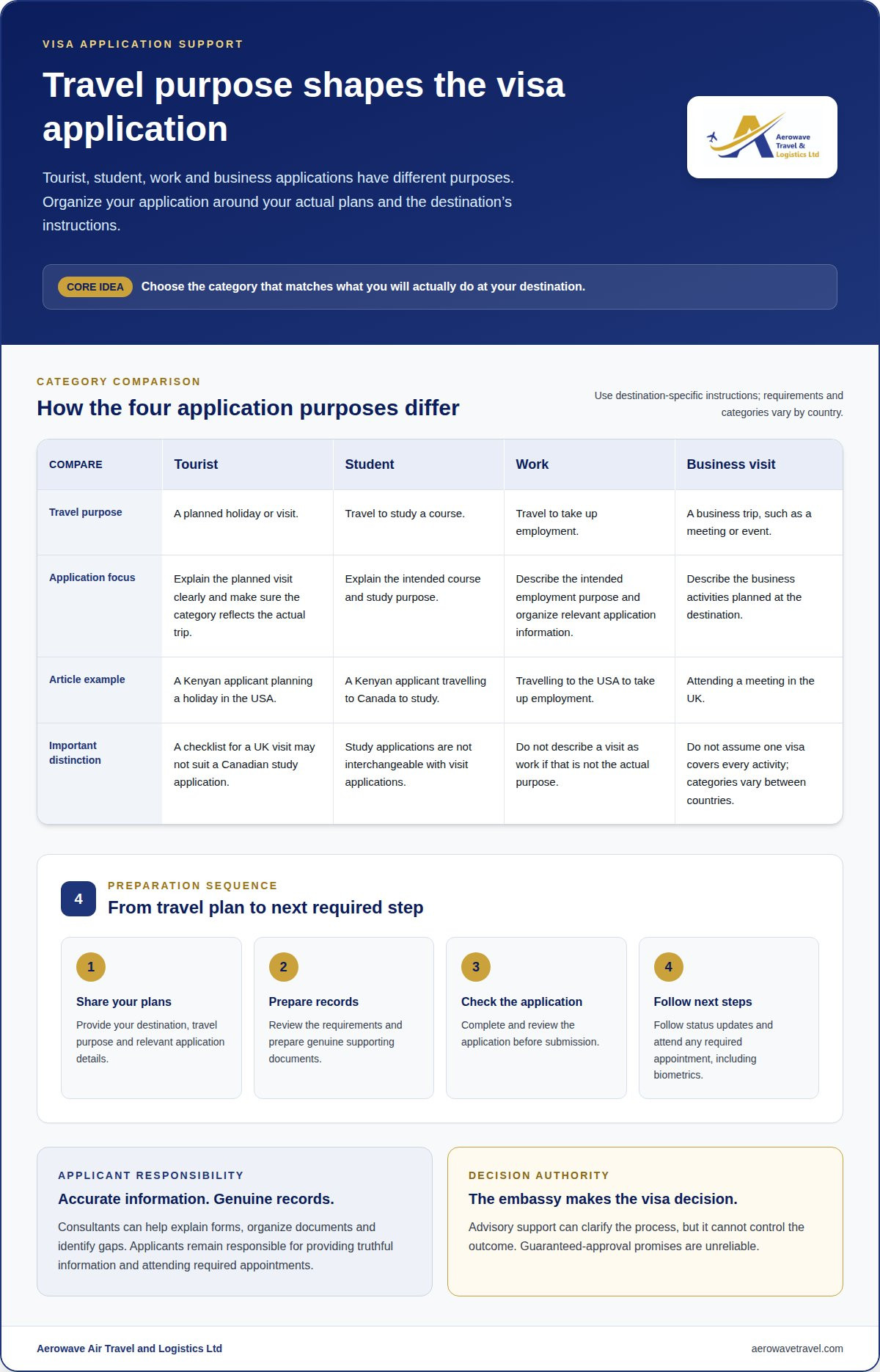
- Tourist, student, work and business applications have different purposes, so support should reflect the visa type and the destination’s requirements.
- Understand what international coverage includes, from destination-specific guidance to practical help preparing an application.
- Be cautious of guaranteed-approval promises and fabricated documents; the embassy makes the visa decision.
- In Kenya, visa application support can fit alongside travel planning, including flight bookings and airport transfers where needed.
Personalized consultations and application support
A tailored consultation connects your travel purpose, destination and documents to the application process. For applicants in Nairobi and elsewhere in Kenya, guidance can clarify which steps need attention before submission.
Personalized Visa Consultations
A consultation starts by identifying the reason for travel, such as tourism, study or a migration plan. The consultant can then explain relevant application stages, document needs and embassy procedures. Applicants outside Nairobi can discuss their circumstances remotely where that option is available, helping them plan without assuming every step happens in person. Look for clear communication and ethical guidance, not promises about outcomes.
Application and Documentation Assistance
Application support can include explaining form questions, organizing supporting records and reviewing documents before submission. Missing documents or incorrect forms can delay an application or affect its outcome, so a review can help identify gaps early. For example, a consultant may flag an incomplete form or a document that does not support the stated travel purpose. Applicants must provide accurate information and genuine records.
Never submit a fabricated bank statement or letter. Such documents can result in a multi-year ban. Visa consultants generally assist with applications, document preparation and embassy procedures; immigration lawyers typically handle legal representation and complex immigration cases. Understanding the distinction helps you seek guidance suited to your situation.
Application Tracking and Updates
Tracking depends on the application channel and the updates available from the relevant embassy or application centre. A consultant can help explain a status message, organize correspondence and clarify what action it requests. Ask how updates will be shared, which contact details will be used and whether you must monitor an official account directly. Clear communication helps you understand the next step without suggesting the consultant controls processing or decisions.
You may also need to attend in person for biometrics when the embassy requires it. A consultant can explain this step, but attendance remains your responsibility.
How do consultancy fees compare with applying directly through an embassy? Applying directly avoids paying for consultancy support, while using a consultant adds a service cost for assistance. The price depends on the case and is given after a quote request; factors include the support needed, document complexity and destination.
What are the steps for applying through a consultancy? The process generally moves from an initial review to document preparation, application checks and submission guidance. A clear sequence helps you understand your responsibilities at each stage.
- Share your destination, travel purpose and relevant application details.
- Review the document requirements and prepare genuine supporting records.
- Complete and check the application before submission.
- Follow status updates and attend any required appointment, including biometrics.
One customer testimonial reports receiving a 10-year multiple-entry visa on the first application attempt after using visa advisory services. This is an individual account, not a promise that another application will have the same result.
Before choosing support, look for transparent, ethical practices and clear communication. Treat any promise of guaranteed approval as unreliable: the embassy makes the visa decision, and advisory support cannot control the outcome.
Tourist, student, work, and business visa support
Visa preparation should begin with your reason for travel and intended destination. For applicants in Kenya, applications for the USA, Canada and the UK each require attention to their own instructions and categories.
Tourist and Student Visa Support
For a tourist application, guidance can help you explain the planned visit clearly. A student visa application has a different focus, including the intended course and study purpose. Organize the details around your actual plans rather than treating every category as interchangeable. Destination instructions guide preparation, so a checklist for a UK visit may not suit a Canadian study application.
Consider a Kenyan applicant planning a holiday in the USA, then compare that with someone travelling to Canada to study. The first application should reflect the visit; the second should explain the education plan. If the purpose changes, reconsider the selected category before submission. Guidance can help identify inconsistencies between your intended activities and the application category.
Work and Business Visa Assistance
Work visa assistance focuses on explaining the intended employment purpose and organizing relevant application information. Business visit visas usually relate to activities such as meetings or attending an event. Your application should reflect the activities planned at the destination. Categories vary between countries, so follow the applicable instructions rather than assuming one process fits every destination.
Before preparing an application, define the trip’s primary activity. Attending a meeting in the UK differs from travelling to take up employment in the USA. A consultant can help you describe your purpose accurately and understand the relevant application path. Guidance should clarify category differences, not recast a visit as work or suggest one visa covers every activity.
A concise summary of your travel purpose can help organize an application around your actual plans:
- Tourism: describe the visit and planned activities.
- Study: identify the intended course and institution.
- Employment: explain the planned work purpose.
- Business visit: outline meetings or the relevant event.
These prompts help structure preparation, but they are not a universal document checklist. Requirements depend on the destination and visa category. Guidance can help align application details with your stated purpose, while you remain responsible for providing truthful information. Travel arrangements are separate from immigration permission, which is decided through the relevant application process.
Once your purpose and likely category are clear, you can coordinate the wider journey around your application plans.
Consultant experience and international coverage
A consultant’s experience matters most when it helps clarify a destination’s application process. Ask how guidance changes between destinations such as the USA, Canada, the UK and Australia. A useful explanation should distinguish destination-specific steps rather than suggest one approach works everywhere.
Which Kenyan visa consultancies have the best reviews and service coverage? No single ranking suits every applicant. Compare reviews that describe the relevant destination, visa type and support received. Coverage is useful when it matches your intended destination and includes clear communication about the consultant’s role.
Reviews are more useful when they describe a specific experience. For example, a detailed account might explain whether the consultant clarified application stages or communicated an update. A general star rating offers less context. Look for recurring themes such as clear explanations, consistent communication and support that matches the service described. Treat promises of guaranteed approval cautiously, since the embassy makes the visa decision.
International manpower partnerships can relate to recruitment or employment journeys abroad, but a partnership does not determine a visa outcome. Ask what the relationship covers, which parties handle recruitment and what role the consultant plays in application preparation. For example, distinguish job-matching support from guidance on completing a visa application. Clear boundaries help you understand who handles each step.
How can I verify a Kenyan visa consultant’s registration and credentials? Ask for the exact credential claimed, its issuing body and any registration reference, then verify those details through the issuing body’s official records. If the consultant claims to provide legal representation, distinguish that role from routine application assistance.
International coverage should be described by destination and service, not as a broad promise to handle every country. A consultant may explain how support differs for a student travelling abroad and a professional pursuing employment. Clarify whether the guidance covers document preparation, application procedures or progress updates. These are distinct tasks, and clear descriptions make the service easier to understand.
Use a simple comparison framework before relying on a consultant’s experience claims:
- Destination: Look for experience relevant to the country on your application.
- Visa purpose: Match examples to tourism, study, work or business travel.
- Partnerships: Identify each partner’s role in recruitment or application support.
- Credentials: Confirm the issuing body and the scope of any claimed qualification.
- Communication: Look for reviews describing specific updates and explanations.
For example, an applicant travelling to Canada to study should seek guidance relevant to that destination and purpose, not rely solely on experience with unrelated applications. A consultant’s explanation should make the next step understandable and distinguish application support from immigration decisions. That clarity helps you assess whether the consultant’s experience fits your plans abroad.
Visa services for destinations including the USA, Canada, UK and Australia
For Kenyan applicants travelling to the USA, Canada or the UK, preparation should follow the chosen destination’s application instructions. Start by matching your travel purpose to the relevant visa category, then organize the application around that country’s process. A tourist visit to the USA, for example, needs a different approach from a study application for Canada.
For each destination, clarify three points first: your reason for travel, the visa category and the application channel. These determine which instructions apply and what information to prepare. A consultant can help interpret the process and organize application materials, while the destination’s authorities retain control over visa decisions.
Use a separate planning approach for each destination instead of carrying one checklist across countries:
- USA: identify the category that matches your travel purpose and follow its application instructions.
- Canada: organize the application around the reason for travel and relevant process.
- UK: distinguish a visit from study or another purpose before preparing forms.
This comparison is a planning aid, not a substitute for each country’s current instructions. A Kenyan applicant travelling to the UK for a visit, for instance, should not assume that information prepared for a Canadian study application will apply. Destination-specific guidance helps clarify the differences and keep each application consistent with its purpose.
Document preparation should reflect the destination and visa category. A consultant can help organize supporting records, review forms and identify missing or inconsistent information before submission. For example, if you state a study purpose, the application details should support that plan. Reusing an old form or checklist without checking its relevance can create avoidable inconsistencies.
Before an application moves forward, clarify who handles each step. You provide truthful information and complete any required personal actions. The consultant can explain preparation and process steps, while the relevant authority makes the decision. This distinction makes the limits of application support clear.
A practical preparation sequence is:
- Name the destination and explain the actual travel purpose.
- Identify the visa category that corresponds to that purpose.
- Prepare and review documents against the destination’s instructions.
- Follow the application channel and respond to requested steps.
If you are comparing the USA, Canada and the UK, plan each application separately. A clear destination, purpose and category give preparation a reliable structure. Personalized guidance can help you understand the process for your chosen country without presenting support as a substitute for an official visa decision.
What visa consultancy services are available in Kenya?
In Kenya, consultancy support can help applicants organize the stages of an overseas visa application. This may include discussing travel purpose, explaining application steps, preparing documents and reviewing forms before submission. The support depends on the destination and visa category, so a tourist application and a student application require different preparation.
A consultation can begin by clarifying where you plan to travel and why. For example, an applicant travelling abroad for a course needs to explain the study purpose, while a visitor should describe the planned visit. This distinction gives the application a clear structure and helps identify which destination-specific instructions should guide preparation.
Documentation assistance can include arranging records, completing application forms and reviewing details for consistency. A consultant may help identify a missing field or a document that does not support your stated travel purpose. You provide accurate information and genuine documents; the consultant facilitates preparation without changing the facts of your case.
Support can also include explaining procedural messages and helping you understand the next application step. For instance, a status update may call for further action or simply indicate that processing continues. Clear communication should explain what the message says and who needs to act. Understand how updates are shared and what remains your responsibility.
Before seeking support, define the task you need help with. These examples can make a consultation more focused:
- Destination guidance: explain the country and travel purpose.
- Form preparation: identify questions or sections that need clarification.
- Document organization: arrange supporting records around the application purpose.
- Process support: clarify application stages and relevant updates.
Distinguish application assistance from legal representation. Visa consultants generally help with applications, document preparation and embassy procedures; immigration lawyers typically handle legal representation and complex immigration cases. This distinction matters if your case involves a complex legal issue rather than preparation support. Matching the task to the professional’s role helps keep expectations clear.
Ethical guidance is another practical part of the service. A consultant should communicate clearly, explain the scope of assistance and avoid guarantees about visa outcomes. The embassy makes the decision, so application support cannot promise approval. A sound process focuses on accurate information, organized documents and clear explanations at each step.
For help organizing an application in Kenya, arrange personalized visa application guidance suited to your travel purpose and destination.
Aerowave Air Travel and Logistics Ltd: Visa Consultancy Services
Aerowave Air Travel and Logistics Ltd provides visa consultancy to help applicants organize application preparation around their destination and travel purpose. Turn to the service when you need guidance with application documents or clarity about the steps ahead. Visa decisions remain with the relevant embassy, so consultancy supports preparation rather than issuing visas.
For a connected travel plan, Air Ticketing Services and Flight Booking Services can support your journey arrangements, while Airport Transfers Services can help coordinate ground transport. Bringing these needs into one planning conversation can make your arrangements easier to manage.
If you’re ready to discuss application support and travel arrangements, contact Aerowave Air Travel and Logistics Ltd.
Prepare for your next journey with a clear plan
Your next step is to turn your travel plans into a practical preparation sequence. Decide which parts of the application need guidance, gather information relevant to your purpose and plan for any steps that require your personal involvement. A steady plan helps you approach the process with greater focus.
For Kenyan travelers, visa consultancy services can support application preparation alongside journey arrangements. Aerowave Air Travel and Logistics Ltd offers visa consultancy, Air Ticketing Services, Flight Booking Services and Airport Transfers Services, bringing application support and key travel arrangements into one planning conversation.
Whether you are beginning an application or organizing travel around one already underway, choose a next step that suits your needs. Contact Aerowave Air Travel and Logistics Ltd to discuss your plans and move forward with confidence.
Frequently Asked Questions
Which countries and visa types do Kenyan visa consultants handle?
Kenyan visa consultants may assist with applications for destinations such as the USA, Canada, the UK and Australia, across tourist, student, work and business categories. Support depends on the destination and purpose, so describe your planned activities clearly from the start. Attending a business meeting, for example, differs from taking up employment. Ask what application preparation and procedural guidance applies to your destination.
What documents do visa consultants typically require?
Consultants typically begin with your passport details, intended destination, travel purpose and the application information you already have. They may then explain which supporting records relate to your visa category. A student applicant, for example, should prepare information about the intended course, while a tourist should be ready to explain the planned visit. The destination’s instructions determine document requirements, so avoid relying on a generic checklist.
Can a visa consultant guarantee visa approval?
No. A visa consultant can support application preparation, but the embassy or relevant authority makes the visa decision. Treat a guarantee of approval as a warning sign, even if it comes with a confident explanation or a proposed shortcut. A useful service explains its role, communicates clearly and helps organize accurate information without promising a particular result. Approval is separate from the consultant’s assistance.
What are the risks of using a visa consultancy, and how can I avoid scams?
Risks include unclear service terms, false promises of approval and pressure to submit misleading documents. A fabricated bank statement or letter can result in a multi-year ban. Before proceeding, make sure the consultant explains the support provided, communicates transparently and does not encourage false information. Keep your application details accurate, retain copies of submitted records and avoid anyone claiming they can control an embassy’s decision.