
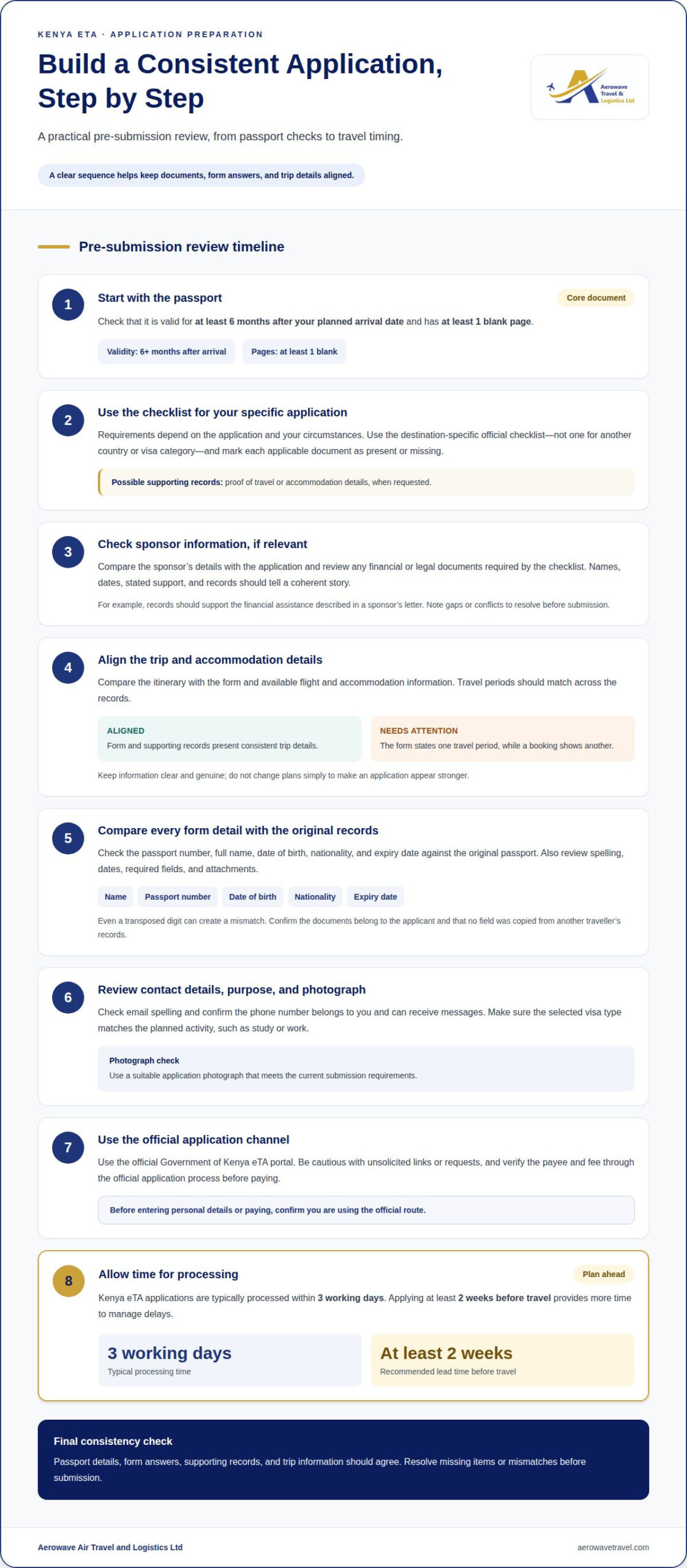
To avoid mistakes in visa applications in Kenya, start with the documents required for the specific application and make sure the details are consistent. Kenya eTA applicants generally need a passport valid for at least six months after their planned arrival date, with at least one blank page, according to the Government of Kenya. Clear, accurate information matters just as much as having the right documents ready.
It’s understandable to want another set of eyes on your application before you submit it. A careful review can help identify mismatched trip details, incomplete information, photo issues, or timing concerns while there’s still time to address them. This guide explains which Kenya eTA documents to prepare, what a professional review can cover, how to keep your travel and accommodation details aligned, and why applying early can help you manage the process calmly. You’ll have a practical picture of what to organise and what to expect before submission.
Key Takeaways
- Prepare the Kenya eTA documents that match your purpose of travel, and keep supporting information complete and consistent.
- A professional review can compare passport details with the original and flag errors or missing application fields.
- Keep your itinerary and accommodation information aligned so the trip details present a clear, accurate picture.
- Use a suitable application photograph and ensure it meets the current submission requirements.
- Allow time for processing: Kenya eTA applications are typically processed within three working days, but applying at least two weeks before travel provides more time to manage delays.
1. What documents are generally required for a Kenya eTA?
Begin with your passport, because its details anchor the rest of the application. The Government of Kenya says applicants generally need a passport valid for at least six months after their planned arrival date, with at least one blank page. A visa consultant can use this requirement as an initial document check, then compare the passport information with the form and supporting records. Your passport name, number, and travel dates should not conflict with other submitted details.
The supporting documents required depend on the application and your circumstances. A visa consultant can use the destination-specific official checklist to identify what applies, rather than relying on a checklist for another country or visa category. For example, a checklist may ask for proof of travel or accommodation details. The consultant can compare the requested items with your records, note missing documents, and help organise your file before submission.
If your application relies on another person’s support, the sponsor documents need a separate consistency review. A visa consultant can compare the sponsor’s details with the application and review the financial or legal documents required by the destination checklist. Names, dates, stated support, and document information should tell a coherent story. For example, if a sponsor’s letter describes financial assistance, the accompanying records should support that arrangement. The consultant can also identify gaps or conflicting details for you to resolve before submission.
Proof of travel and supporting records help explain the purpose and structure of your trip. A visa consultant can review the itinerary alongside available flight and accommodation information, then check whether those details match the form. If the application states one travel period but a supporting booking shows another, the discrepancy needs attention. The review should focus on clear, genuine information, not on changing plans to make an application appear stronger.
For completeness, a visa consultant can work through each applicable checklist item and record whether the required document is present. The form can then be checked against official documents, including your passport, so spelling, dates, and identifying details align. This step-by-step comparison can catch an incomplete field as well as a missing attachment. It also helps you avoid mistakes in visa applications in Kenya by keeping your file organised before submission.
How can a visa consultant help applicants verify official visa application websites and avoid scams in Kenya? A visa consultant can direct you to the official Government of Kenya eTA portal and help distinguish it from unrelated pages presenting themselves as application channels. Before entering personal details or paying, use the official route and be cautious with unsolicited links or requests.
2. Can someone help me review my Kenya eTA documents?
Yes. A visa consultant can review your application alongside your original passport and supporting records before submission. The consultant can compare your passport number, full name, date of birth, nationality, and expiry date with the form. Even a transposed digit in the passport number can create a mismatch. The review can also check that the passport belongs to you and that no field has been copied from another traveller’s documents. If a detail differs, the consultant can identify the exact field for correction.
Contact details deserve the same careful review. A visa consultant can check your email address for spelling errors and confirm that your phone number belongs to you and can receive messages. For example, a missing digit in a phone number or a mistyped email domain could prevent you from receiving an update. The consultant can also compare contact details across relevant forms and flag conflicting versions. This helps keep important application communication directed to the right person.
A form review covers required fields, dates, spelling, and answers that must agree with official documents. A visa consultant can work through the application checklist, check for blank fields, and compare each answer with your passport or other relevant records. Kenyan applicants should select the visa type that matches their planned activity, such as study or work. The consultant can explain how your stated purpose relates to the available category, helping prevent an application from describing one activity while selecting another.
If you find an error, a visa consultant can identify the affected field and explain the appropriate correction process before submission. If your application has already been refused, the consultant can help review the stated reasons, identify document or information gaps, and prepare a more consistent reapplication. Address the reason for refusal rather than simply resubmitting the same file. This makes the next application more responsive to the issue identified.
After submission, check for updates through the application channel you used. A visa consultant can help organise the reference and explain how to follow your application’s status. For fees, the consultant can direct you to the amount shown through the official application process. Verify the payee and fee there before paying, rather than relying on unsolicited messages or an unrelated page.
A careful review can help applicants avoid mistakes in visa applications in Kenya, especially when passport details, form answers, and contact information need to align. For support with these checks, Visa Consultancy Services can help organise the application review before submission.
3. Keeping travel and accommodation details consistent
A clear itinerary connects your application form with your actual plans. A visa consultant can review your stated purpose, travel dates, flight details, and accommodation information together. The dates should align across the itinerary and supporting records. For example, if your form gives one arrival date but your flight information shows another, clarify the difference before submitting.
Accommodation evidence should support the address or stay described in your application. Depending on your trip, this may include a hotel booking, rental agreement, or invitation letter from a host. A visa consultant can check that the named traveller, location, and planned dates make sense alongside the itinerary. Use genuine, accurate bookings. Changing details to make an application appear stronger can create contradictions instead.
Your return plans should also fit your circumstances. A visa consultant can review relevant evidence, such as an employment contract, business records, property documents, or information about family dependants. These records can help explain your connections to Kenya and intention to return. The consultant can check whether the stated trip length and purpose are consistent with your circumstances, then flag gaps that may need clearer supporting documents.
Incorrect or incomplete information, inconsistent trip details, and weak evidence of an intention to return are common concerns in visa decisions. A visa consultant can help address them by comparing your itinerary, application answers, and supporting records, then highlighting discrepancies before submission. The review can make your explanation clearer, but it should reflect your real plans and situation.
Passport validity is another part of trip planning. A visa consultant can check whether your passport remains valid throughout your planned stay and whether its details match your travel records. You should also consider travel insurance against the destination’s specific checklist. Requirements differ by destination, so don’t assume that a rule for one country applies to Kenya or another country.
Timing affects how calmly you can resolve a booking or document mismatch. Kenya eTA applications are typically processed within three working days, although processing may take longer. Applicants are advised to apply at least two weeks before travel. A visa consultant can use your intended departure date to plan document review and submission early, leaving time to address incomplete records or unexpected processing delays.
For a consistent application, a visa consultant’s final review brings your itinerary, accommodation evidence, passport, and return-related documents together. Each item should support the same travel purpose and dates, so your file presents a coherent account rather than separate, conflicting details.
4. Preparing a suitable application photograph
A photograph can cause trouble if it is unclear, belongs to another applicant, or fails the application’s stated requirements. A visa consultant can start by reviewing the current official instructions for your specific application. The consultant can then compare your image with those instructions, including any stated file type, size, framing, or background requirements. These details can differ by destination and application process, so a photo accepted for one form may not suit another.
The review should also check whether the file opens properly and shows the intended applicant clearly. If the image appears blurred, cropped incorrectly, or difficult to identify, a visa consultant can flag it before submission. The consultant should not guess at technical requirements or apply a generic photo rule. Instead, the official instructions for your application guide the review, helping prevent common mistakes caused by reusing an unsuitable image.
You can prepare the photograph alongside your passport and other supporting records. A visa consultant can check that the image is assigned to the correct person and saved in a clearly labelled file. For a family application, for example, separate names can help prevent one applicant’s photograph from being attached to another person’s form. Clear file labels also make it easier to identify missing documents during the final review.
Application records need careful handling after submission, too. A visa consultant can help you organise copies of the completed form, submitted documents, and application reference in one accessible folder. You can then refer to the saved version if a detail needs clarification or a status update is required. Keeping the final submitted file separate from draft documents also reduces the risk of relying on an incomplete version.
Interview preparation applies when the relevant visa process includes a consular interview. A visa consultant can help you review your application and supporting documents, then practise clear answers about your travel purpose, itinerary, accommodation, and funding. For example, your answer about a planned visit should align with the dates and purpose stated in the submitted form. Preparation should strengthen clarity, not create rehearsed claims that conflict with your records.
You can also prepare for questions about employment, travel history, or a sponsor when those subjects appear in your application. A visa consultant can identify answers that need a clearer explanation and help you keep your responses factual. If a previous refusal is relevant, be ready to discuss the stated reason honestly and explain any changed circumstances. The exact interview questions depend on the application and the officer’s assessment.
Before your file is finalised, a visa consultant can check that the photograph, form, and supporting documents belong to the same applicant and version. This final step can catch an incomplete upload or spelling difference in a file label before submission. An organised record also makes later follow-up easier, since you can locate the correct photograph and submitted documents without confusing them with drafts.
5. Visa processing delays and application timing
Processing estimates help set expectations, but they aren’t a travel guarantee. Kenya eTA applications are typically processed within three working days, although processing may take longer. A visa consultant can use that estimate as one part of your schedule, not as a reason to leave submission until the last moment. The application process also needs time for document review, corrections, and status follow-up.
Applicants are advised to apply at least two weeks before travel. A visa consultant can work backwards from your departure date, allowing time to assemble the application and resolve issues before submission. For example, if a passport detail needs correction or a supporting record is missing, addressing it before submission is more practical than discovering it close to departure.
Timing can also depend on the destination and the season. Visa processing turnaround times differ by country and may vary during peak travel periods. A visa consultant can consider the destination’s stated processing information, your planned travel dates, and any required appointment or supporting documents. This creates a schedule based on your circumstances rather than assuming every immigration application follows the Kenya eTA timeline.
Early preparation helps because review and processing are separate stages. Before submission, a visa consultant can check whether your form is complete, uploaded records are readable, and travel details align. After submission, retain your application reference and use it to follow status updates. Keep your application reference available when checking for status updates.
Monitoring your application does not mean repeatedly submitting a new one while the first remains in process. A visa consultant can help you keep the reference, submission record, and any relevant updates together. If a request for further information arrives, those records make it easier to identify the application and respond to the specific issue. This organised approach also helps prevent confusion between a draft and the submitted version.
Your travel plans should account for the possibility of delay, especially when visiting during a busy period or coordinating several arrangements. A visa consultant can help sequence the application review, submission, and follow-up around your intended departure. Keep flight and accommodation plans accurate throughout. An application schedule should not encourage you to provide details that no longer reflect your trip.
Visa applications and immigration decisions depend on the destination’s process and the submitted file. A consultant can manage the document review and help plan the steps, while the applicant tracks the application and keeps travel arrangements aligned. For assistance planning your Kenya eTA application, request visa application support.
Aerowave Air Travel and Logistics: Visa Consultancy Services
Aerowave Air Travel and Logistics provides Visa Consultancy Services to help travellers organise application documents and prepare for submission. This support can be useful when passport details, supporting records, photographs, and travel plans need a coordinated review. The team can help identify missing information and inconsistencies, while you remain responsible for providing accurate details and making the final application.
Travellers arranging flights alongside eTA preparation can also use Aerowave Air Travel and Logistics’ Air Ticketing Services or Flight Booking Services to coordinate travel plans. Visa consultancy provides guidance and preparation, not visa issuance, so wait for official approval before travelling.
For help preparing your Kenya eTA documents, contact Aerowave Air Travel and Logistics Ltd.
Make your next step a well-prepared one
Your application is one part of a wider travel plan. Give yourself room to make decisions carefully, keep your arrangements aligned with your intended trip, and seek professional guidance if you want support coordinating the process. A thoughtful review can help you approach the next step with greater confidence and avoid mistakes in visa applications in Kenya.
Aerowave Air Travel and Logistics also offers Air Ticketing Services, Flight Booking Services, and Airport Transfers Services to support related travel arrangements. These services can help keep your planning connected while you focus on preparing for your journey.
For assistance with your travel plans, contact Aerowave Air Travel and Logistics. Take the next step when you’re ready, with a clear plan for the journey ahead.
Frequently Asked Questions
Can someone help me review my Kenya eTA documents?
Yes. A visa consultant can review your eTA application and supporting documents for missing information or conflicting details. For example, the consultant can check whether the information in a host invitation matches your stated travel purpose. Aerowave Air Travel and Logistics Ltd provides Visa Consultancy Services for application guidance and document preparation. This support helps organise your application, but the Government of Kenya makes the eTA decision and issues approvals.
What documents are generally required for a Kenya eTA?
A passport is a key document, and you should use the current official checklist for your circumstances. The Government of Kenya says applicants generally need a passport valid for at least six months after their planned arrival date, with at least one blank page. Depending on your trip and the application instructions, relevant supporting information may include travel or accommodation details. Use the eTA checklist rather than requirements written for another destination.
What are the most common mistakes in visa applications from Kenya?
Frequent problems include incomplete forms, misspelled names, incorrect passport numbers, and supporting records that conflict with stated travel plans. For example, an application might give a different travel date from its itinerary. Applicants can also overlook a destination-specific document or submit an unclear photograph. A visa consultant can review your file as a whole, helping identify these issues before submission rather than treating each document as unrelated.
What documents are required for visa applications by Kenyan citizens?
There is no single document list for every visa application by Kenyan citizens. Requirements depend on the destination and visa category, so use the relevant official checklist. A file may require a valid passport, application form, travel details, accommodation evidence, or financial and sponsor documents, depending on that checklist. For example, a study application and a visitor application may request different supporting evidence.
How can a visa consultant help Kenyan applicants complete visa forms accurately and consistently?
A visa consultant can compare your form answers with your passport and supporting documents, then flag differences for correction. This includes names, passport numbers, dates, contact details, and stated travel purpose. For instance, if a form gives a different spelling from the passport’s machine-readable information, the consultant can point out the mismatch. Provide truthful information and approve your final answers before submission.
What passport validity and photo requirements apply to visa applications in Kenya?
For a Kenya eTA, the Government of Kenya says your passport should remain valid for at least six months after planned arrival and have at least one blank page. Photo specifications depend on the destination and application instructions, so don’t assume a single size or format applies to every visa. Follow the current official checklist and ensure your uploaded image meets its stated requirements.
How can a visa consultant help Kenyan residents decide when to apply for a visa before travel?
A visa consultant can plan around your intended departure date, the destination’s processing information, and the time needed to prepare supporting documents. Kenya eTA applications are typically processed within three working days, though they can take longer; applicants are advised to apply at least two weeks before travel. Other countries use different timelines, so Kenyan residents should plan according to the specific visa category and destination.
What are the rules for visa interviews, biometrics, and appointments in Kenya?
Interview, biometric, and appointment requirements depend on the destination and visa category; there is no single rule for every Kenyan applicant. The relevant official instructions explain whether an appointment or in-person step applies and what to bring. A visa consultant can help organise the required records and prepare you to explain your travel purpose clearly. Follow the instructions for your specific application, not another country’s process.