
Booking air tickets online starts with choosing your route and dates, comparing the full fare, and entering passenger details exactly as they appear on travel documents. Flight tickets are normally released about a year before departure, giving you time to plan ahead and compare options for your trip.
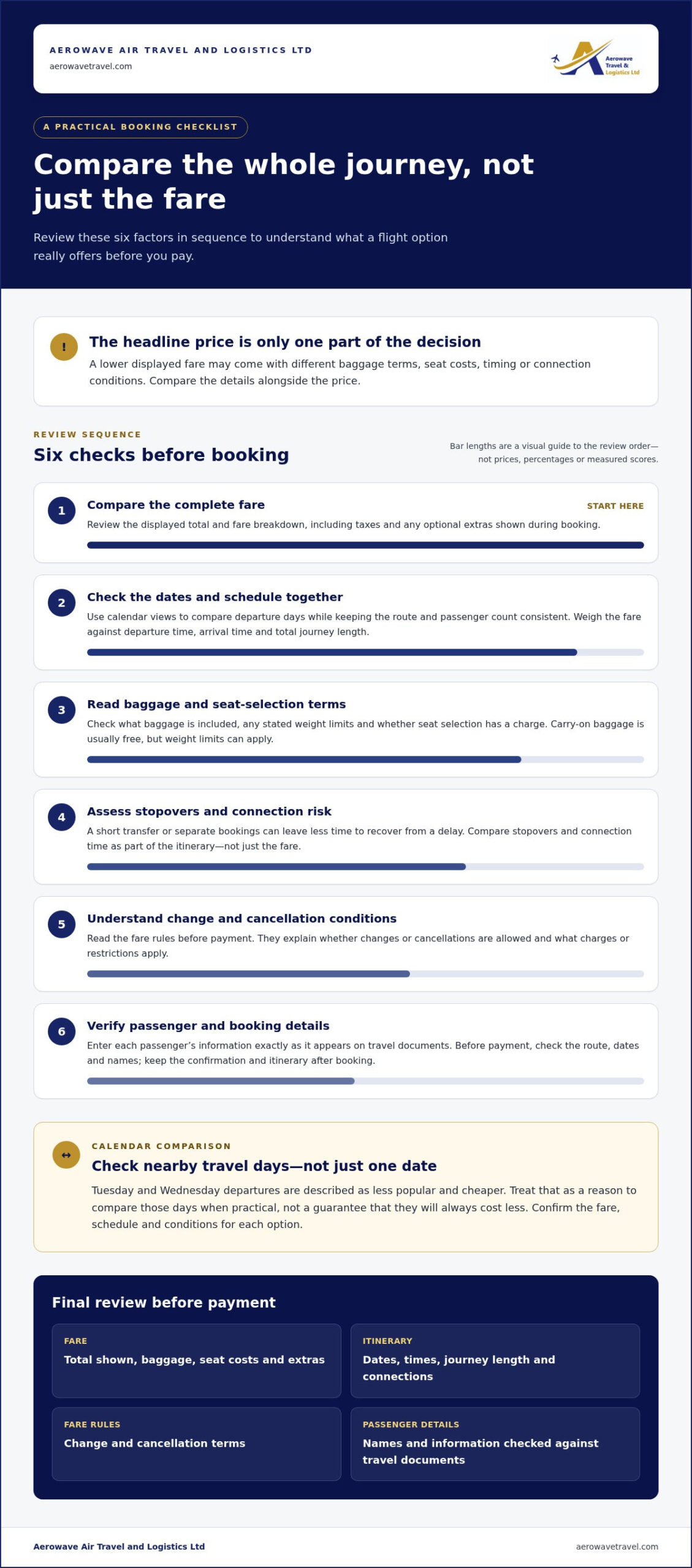
A low fare is only part of the decision. Check baggage allowances, seat-selection costs and extras, then review connecting flights carefully. A short transfer or separate bookings can leave less time to recover from a delay. Compare travel dates and journey times together to assess overall convenience, not just the displayed price.
This guide explains how to book online, compare fares across dates, enter passenger information carefully and assess connection risks before paying. You’ll also learn what to check in the fare breakdown, so you can make an informed choice and plan your travel with greater confidence.
Key Takeaways
- Start with your route and travel dates, then compare the complete fare before booking.
- Use calendar views to compare different departure days and identify options that suit your schedule.
- Enter passenger details exactly as they appear on travel documents to avoid booking errors.
- Assess connection times and whether your flights are on one booking before choosing an itinerary.
- Review baggage, seat-selection, tax and optional-extra costs so you understand what the fare includes.
How to book online?
Book online by selecting a route, dates and passenger count, then comparing suitable itineraries. Before payment, review the fare conditions, baggage allowance and booking details for your chosen flight.
Online Flight Booking
Start with the departure city, destination and travel dates. For example, a Nairobi-to-Mombasa search needs the correct direction and dates before you compare results. Add the passenger count, then review departure times, stopovers and the total displayed for each itinerary.
Choose a flight only after checking its conditions. Review the baggage allowance, change or cancellation terms, and any charges shown during booking. Carry-on baggage is usually free, but weight limits can apply, so check the stated allowance rather than assuming every bag qualifies.
- Enter your departure airport, destination and preferred travel dates.
- Set the passenger count and search for available itineraries.
- Compare journey times, stopovers, baggage terms and displayed fare details.
- Enter each passenger’s information carefully and review it before payment.
- Complete payment through the booking process and save the confirmation.
After booking, keep the confirmation and itinerary somewhere accessible. Check the route, dates and passenger names against your travel documents. If the confirmation differs from your selection, address the discrepancy promptly through the booking channel you used.
Booking Flights Early
Planning ahead gives you time to compare dates and itineraries before committing. Flight tickets are normally released about a year before departure, so you can start looking well before your intended trip. Early availability does not mean every date has the same fare or schedule.
Start with a flexible date range if your plans allow it. Compare nearby departure dates and check whether another day offers a more suitable schedule. Then weigh the fare against journey duration, stopovers and the practical timing of your arrival.
- For an early departure, such as 6 am, check whether public transport will be running.
- Review the airport arrival plan alongside the flight time and route.
- Compare package holidays if useful, since travel companies may offer flight discounts when buying tickets in large volumes.
- Revisit your preferred itinerary before paying, and read its fare conditions.
For instance, a 6 am departure may require an arrival plan that works before normal transport services begin. Compare the full journey from home to the airport, not only the flight schedule. A considered booking combines a suitable fare with workable travel arrangements and clear passenger details.
Comparing fares with the price histogram
A price histogram or calendar view can help you compare fares across travel dates. Enter the same route and passenger count, then compare the dates shown before choosing an itinerary.
Changing one detail at a time makes comparisons clearer. Keep the route and passenger count constant, then review prices for different departure days. Airline websites may offer calendar views showing fares across the days of the week.
What are the rules for changing or cancelling an air ticket? The fare conditions explain whether changes or cancellations are allowed and what charges or restrictions apply. Read these terms before paying, since conditions can differ between fares and itineraries.
Use the calendar to spot patterns, not to assume that one date always costs less. Tuesday and Wednesday departures are described as less popular and cheaper, so include them when your schedule allows. Compare the displayed fare with the departure time and total journey length.
A useful comparison keeps the main trip details consistent. For example, compare a Nairobi-to-Mombasa itinerary on nearby dates, using the same passenger count and similar flight times. If one option includes a stop and another is direct, compare the additional journey time as well as the fare.
- Set the same origin, destination and passenger count for each search.
- Use the calendar view to compare different departure dates.
- Include Tuesday and Wednesday in your comparison when practical.
- Compare similar itineraries, including stopovers and departure times.
- Review each fare’s change and cancellation conditions before payment.
A lower calendar fare may not represent the same journey conditions. Open the fare details and compare what is included, such as baggage allowance and any seat-selection charge. Then consider whether the schedule suits your plans. A fare that saves money but results in an impractical arrival time may not be the best fit.
Make a short list of suitable options, noting their dates, times, stopovers and fare conditions. This helps you see the trade-offs without relying on a single headline price. Check your selected dates again before payment, especially if your plans have changed since your first search.
If you prefer assistance coordinating itinerary choices, flight booking support can help organise the comparison around your route and schedule.
Airline websites are useful for comparing flight prices across different days of the week. Calendar views bring day-by-day prices together, giving you another way to review possible travel dates. Use the view to identify dates for closer comparison, then keep the route and passenger count consistent as you assess options. This makes it easier to focus on price differences across days instead of changing several search details at once.
Entering travel dates and passenger details
Choose dates that fit your plans, then enter each traveller’s details carefully. Comparing Tuesday and Wednesday departures can reveal options described as less popular and cheaper.
What travel documents and entry requirements do Kenyan air travellers need? Requirements depend on the destination and itinerary. Check passport validity and the visa or entry documents required for every country on your route before finalising travel plans.
Start with your intended departure and return dates, then consider whether either can shift. A flexible date range helps you compare schedules and displayed fares without changing the route or passenger count. If your trip includes an event or fixed appointment, work backwards from its start time and allow for the journey to your departure airport.
Compare Tuesday and Wednesday departures with other suitable dates. These days are described as less popular and cheaper, but the lowest displayed fare may come with a less convenient time. Review departure and arrival times, stopovers and total journey duration together. A fare comparison is more useful when each option serves the same travel purpose.
Review passenger details separately for each traveller. Enter names in the same order and spelling shown on each person’s travel document. Compare the passenger-name fields with the document before continuing, rather than relying on memory or an informal nickname. Check dates of birth and other requested details against the relevant document as well.
- Set the departure and return dates, including a flexible range if your schedule allows.
- Compare Tuesday and Wednesday with other possible departure days.
- Review each traveler’s name and requested details against their travel document.
- Check the itinerary’s dates, times and passenger count before payment.
For a family booking, review each name individually rather than assuming one person’s entry confirms the whole group. For a work trip, compare the selected dates with meeting times and planned arrival needs. These checks can catch mismatches between the booking and the purpose of travel.
Entry requirements relate to every country on the itinerary, not only the final destination. A connecting route may pass through another country, so include each transit point when reviewing required documents. Keep the travel document used for booking handy while entering details, then compare the final itinerary against it before payment.
Before submitting payment, pause on the passenger-details screen and read every field again. Confirm the route, travel dates, passenger count and spelling. This final review can catch a mistyped date or name while the booking is still in progress, rather than after the confirmation arrives.
Connecting flights and missed-connection risks
A connecting itinerary adds a transfer between flights, so assess the airport change as carefully as the fare. Compare the scheduled arrival and departure times, terminal details, and whether both flights are on one booking or separate bookings.
First, identify where the connection takes place. A transfer through a large airport, for example, may involve changing terminals, passing security again or following transit procedures. Check the itinerary for terminal information and transfer instructions. A connection that looks simple on the search screen can involve extra steps after landing.
Next, assess how much of the scheduled transfer time is usable. Arrival and departure times show the gap, but walking, queues and boarding procedures can use part of it. Review the airport layout and itinerary instructions, then consider whether you can complete each step at a steady pace. Don’t choose solely by the shortest total journey.
The booking structure matters. If both flights appear on one booking, review the ticket conditions to understand what happens if an earlier flight is delayed. Separate bookings require you to consider each flight’s terms and may leave you managing a missed onward departure independently. Check whether you must collect and recheck baggage, clear immigration or move to another terminal before continuing.
- Confirm the transfer airport and any terminal change shown in the itinerary.
- Read whether the flights are on one booking or separate bookings.
- Check baggage instructions for the connection.
- Review the change and cancellation conditions for each flight.
- Compare the connection time with the airport steps involved.
For example, an itinerary with separately booked flights could require you to collect checked baggage after the first arrival. You would then need to follow the airport’s process for checking in again and reaching the next departure gate. A delay on the first flight could reduce the time available for those steps, so assess this arrangement before paying.
Keep the full itinerary and booking references accessible during travel. Note the transfer airport, flight sequence and any baggage or terminal-change instructions. If the first flight is delayed, use the airline or booking channel associated with that flight and refer to its applicable conditions. For a tight connection, know where to find your onward flight details before departure.
Choose an itinerary that fits your priorities, not simply the one with the lowest displayed fare or shortest elapsed time. A direct flight avoids a transfer, while a connecting route requires a plan for airport procedures and delays. Reviewing each segment and its booking terms helps you understand the practical risks before confirming travel.
Air ticket fees and taxes in Kenya
The amount shown during a search may not represent the whole cost of a trip. Before purchasing, inspect the fare breakdown for air taxes, baggage, seat selection, travel insurance and other extras. Compare the final amount for the same route and passenger details, not just the first figure displayed.
Open the price details for each itinerary. Check the fare and any listed taxes or charges, then note whether the total changes after you select baggage or a seat. For example, one option may show a lower starting fare, while another includes baggage or a preferred seat in its displayed total. Only a like-for-like comparison shows which works better for your plans.
Baggage can affect the amount you pay. Check the allowance and any cost for adding or changing bags before purchase. Carry-on baggage is usually free, but weight limits may apply. If you plan to travel with checked luggage, compare totals with that requirement included instead of assuming the initial fare covers it.
Seat selection is another item to check. Some fares may show a separate charge for choosing a seat, so review the booking screen before deciding. If you’re travelling with others, consider whether selecting seats matters to your plans. Compare the itinerary’s full displayed cost with and without this option.
Review optional extras carefully. Check whether travel insurance or another add-on has been included automatically, and remove anything you don’t intend to buy before payment. Read each item’s description to distinguish a selected extra from the fare and taxes. The final review should show the amount due for the choices you made.
- Open the fare breakdown and identify listed taxes and charges.
- Compare baggage allowances and costs for the bags you plan to take.
- Check whether seat selection adds a separate charge.
- Review insurance and other extras for automatic selection.
- Compare final totals for itineraries with equivalent choices.
For example, compare two Nairobi departures with the same baggage and seat choices. Then review their displayed totals and journey details together. If an extra appears selected, check its description and remove it if it doesn’t suit your plans. This prevents an optional item from being mistaken for a required fare component.
Taxes and listed charges may appear as separate items in the booking breakdown. Read the labels for the specific itinerary, and compare totals only after reviewing these items. A careful final check helps you understand what the amount covers before submitting payment.
For support arranging a booking around your preferred inclusions, request help with flight booking.
Aerowave Air Travel and Logistics Ltd: Air Ticketing Services
Aerowave Air Travel and Logistics Ltd provides Air Ticketing Services and Flight Booking Services for travellers planning a journey. Use its booking support to coordinate your route, travel dates and flight options, including itineraries with connections.
If your trip also needs ground transport, Airport Transfers Services can be arranged alongside flight planning. This can bring the airport journey into the same travel plan. Share your destination, preferred dates and any connection or transfer considerations to make the booking process more focused.
If you’re ready to organise your travel, contact Aerowave Air Travel and Logistics Ltd.
Plan a journey that fits what matters most
Before choosing your next itinerary, decide what you need the trip to make possible. A family visit, work commitment or personal getaway can call for different priorities, even when the destination is the same. Consider the purpose of travel, who is travelling and how much flexibility your plans allow.
That perspective helps keep decisions focused. Rather than treating the booking as a standalone purchase, consider how the journey supports the days around it. A well-planned trip should fit your schedule and leave you clear about the arrangements you have made. Keep your preferred options and key requirements together so you can make the next booking decision with purpose.
When you’re ready to arrange air tickets, Aerowave Air Travel and Logistics Ltd can support your planning. Contact Aerowave Air Travel and Logistics Ltd to discuss your travel arrangements, then take the next step with a clear plan and confidence in your choices.
Frequently Asked Questions
How can I find and book cheap air tickets?
Compare suitable itineraries and assess the complete journey, not only the headline fare. A lower-priced option with an inconvenient arrival, for example, may not suit your plans. If your dates are flexible, review alternatives and compare the final amount after selecting the options you need. Before booking, confirm the route, passenger count and displayed payment amount match your intended trip.
When is the best time to book air tickets for the lowest fares?
No single booking day guarantees the lowest fare for every route. Timing depends on your destination, travel period and schedule flexibility. If your dates are fixed, focus on finding a suitable itinerary for them. If they can shift, compare other dates before deciding. Review fare details before payment, since available options can change over time.
How do air ticket prices vary by season, day, and booking date?
Fares can vary with travel demand, departure day and available options. Busy travel periods may have different schedules and prices from quieter periods. Departure days can also differ, so compare dates around your preferred trip. For a useful comparison, keep your route and passenger count the same while reviewing suitable travel dates and displayed fare conditions.
Where can I compare airfares and book tickets in Kenya?
In Kenya, compare fares on airline websites and through flight-booking services. For a trip from Nairobi or Mombasa, search your route and dates, then review the itinerary before choosing how to book. Aerowave Air Travel and Logistics Ltd offers Air Ticketing Services and Flight Booking Services for domestic and international routes, providing an assisted option for travellers arranging air tickets.
What should I check before paying for an air ticket online?
Before payment, confirm the itinerary, passenger details and final amount shown at checkout. Review selected extras and make sure the payment currency is clear. After paying, save the booking confirmation and reference with your transaction record. Check that the confirmation reflects your chosen travel arrangements, then keep the details accessible for future trip planning.
What are the rules for changing or cancelling an air ticket?
Fare conditions state whether changes or cancellations are allowed and what charges or restrictions apply. Check them before paying, since they can differ between fares and itineraries.